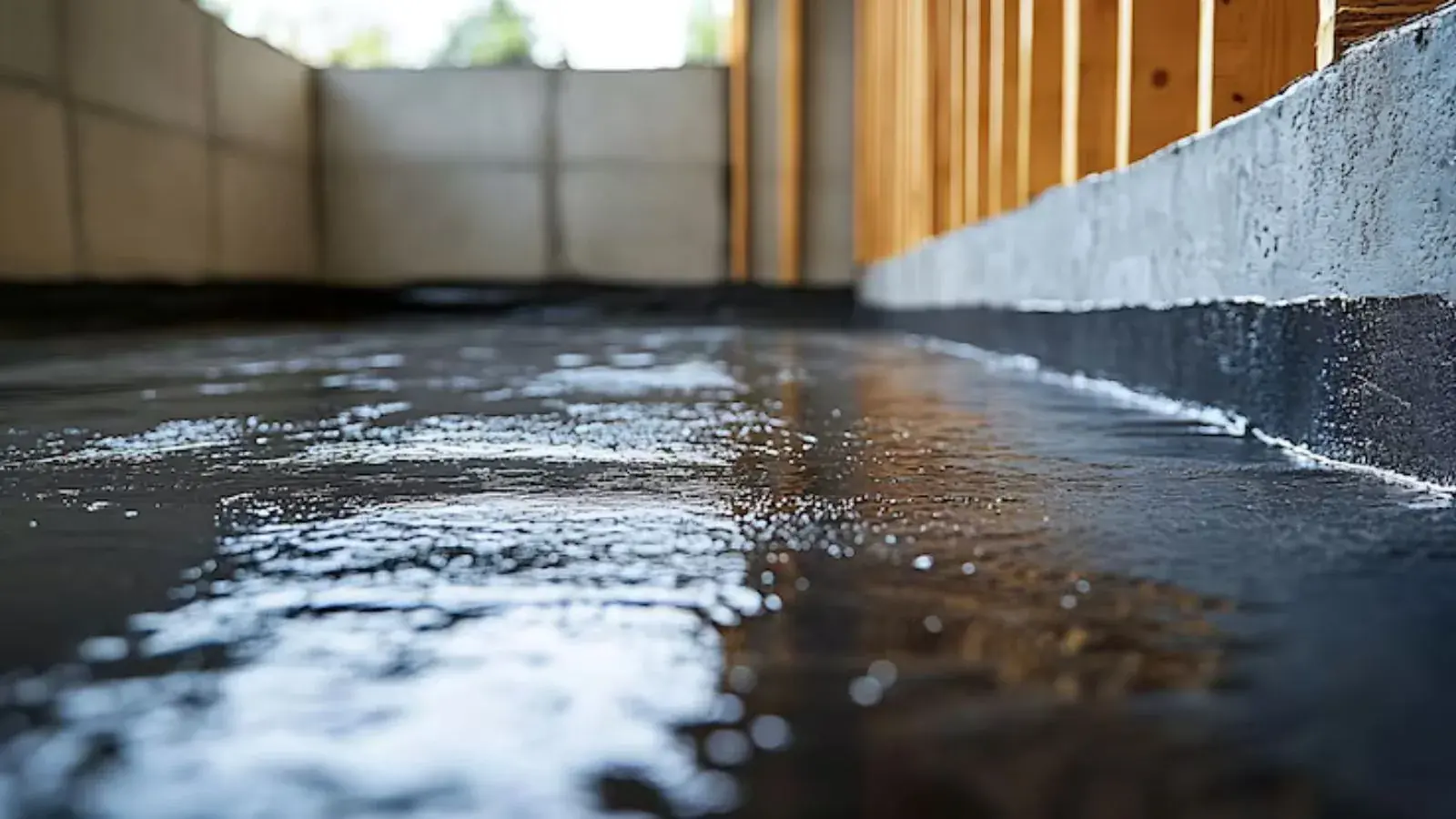
Where basement water comes from
| Entry point | What it looks like | Common fix |
|---|---|---|
| Floor-wall joint | Water seeping along the base of the wall after rain | Interior drain tile and sump |
| Wall cracks | Water streaking from a vertical or horizontal crack | Crack injection and exterior grading |
| Window wells | Water around windows | Clean drains, covers, and wells |
| Floor drain backup | Water rising from the floor drain | Check sewer and sump systems |
| Condensation | Damp walls with no leaks | Dehumidify and ventilate |
Before spending on waterproofing, rule out simple causes. Gutters and downspouts that dump next to the foundation, soil that slopes toward the house, and clogged window wells cause many wet basements. These are cheaper to fix than interior systems.
Interior drain tile and sump systems
An interior drain tile system is a perforated pipe laid along the footing inside the basement, under the slab edge. It collects water that rises at the floor-wall joint and carries it to a sump pit, where a pump sends it outside. It treats the water instead of trying to hold it back.
This is a plumbing-heavy approach, and the sump pump is the key part. Read the sump pump page for what a good pit, check valve, and discharge look like. The discharge must go outside or to a storm sewer, as Forest Lake's code does not allow it into the sanitary sewer.
Water after every storm?
Call and describe where it comes in. The plumber can tell you whether a sump and drain tile system fits.
Sealing and crack repair
Cracks in poured walls can be injected with polyurethane or epoxy from the inside to stop active leaks. This works well for isolated cracks, but it does not address water pressure around the whole foundation. If the water is coming from many places, drain tile is the more reliable system.
Interior drain tile is a good fit when
- Water enters at the floor-wall joint
- The basement is finished or will be
- Exterior excavation is not practical
Exterior fixes are a better fit when
- Gutters and grading are the cause
- A single wall is failing
- You can excavate and want to reduce water pressure on the wall
Water, lakes, and the Forest Lake area
Forest Lake is the largest lake in Washington County, covering about 2,220 acres, and more than 8,160 acres of land and water drain into it, according to the Comfort Lake-Forest Lake Watershed District. For homeowners that means a lot of surface water moves through the area toward the lake, and lakeside lots sit near that water.
Low ground, lakeside lots, and spring thaw all raise the odds of a wet basement. A plumber can check the pit and drainage, but grading and drainage design may also involve a landscaper or the watershed district, so call both if the problem is outside the house.
What decides the price of basement waterproofing
The size of the system and the finish of the basement drive the price.
Insurance often excludes groundwater seepage. A sudden pump or pipe failure may be covered, so ask your agent about what applies.
Want your real number? Call and describe the problem. You get a clear price before work starts.
Call (651) 946-0134Common Questions
Poor grading, clogged gutters, window wells, cracks, a high water table, and a failed sump pump are the common causes.
If water enters at the floor-wall joint or from many places, interior drain tile and a sump are a common solution.
A plumber handles the pump, drain tile, and discharge. Grading and exterior work may involve another trade.
Outside, away from the foundation, or to a city storm sewer. Forest Lake does not allow it into the sanitary sewer.
Usually not for seepage or groundwater. Check your policy for sudden pump failure coverage.