When a hidden leak is an emergency
Quick test: turn off every fixture and appliance, then watch the water meter. If the leak indicator or the dial moves, water is escaping somewhere between the meter and the fixtures.
A high water bill with no change in use
City meters in Forest Lake are read quarterly, so a leak can run for weeks before a bill shows it.
Damp or stained walls and ceilings
Brown rings, bubbling paint, or a musty smell mean water has been moving behind the surface.
A warm spot on the floor
Warm patches on a slab can point at a leaking hot water line under the concrete.
The sound of running water
Hissing or running sounds with everything off point at a pressurized leak.
| What you notice | Likely source | First step |
|---|---|---|
| Water meter moves with everything off | A leak past the meter, often the service line or a fixture | Do the meter test, then call |
| Warm spot on a floor | A hot water line under a slab | Close the water heater supply and call |
| Stain growing on a ceiling | A supply or drain line above, or a roof leak | Photograph it and shut off water to that area |
| Musty smell with no visible water | A slow leak inside a wall or under a floor | Check cabinet floors and call |
How a plumber finds the leak
Meter and isolation test
Closing valves in stages shows whether the leak is on the street side, inside the house, or on a single branch.
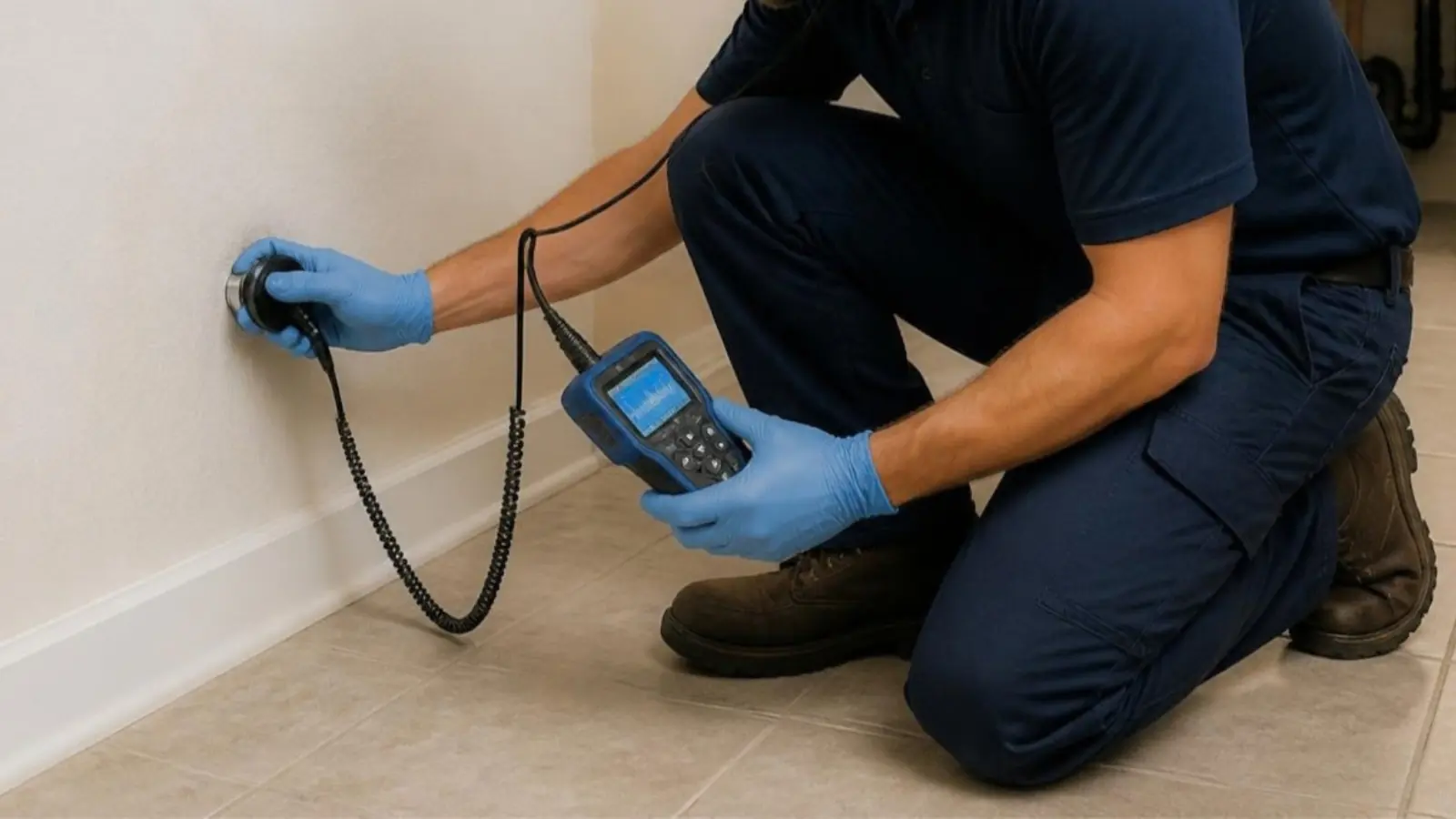
Acoustic listening
Sensitive microphones and ground sensors pick up the sound of water escaping under pressure.
Thermal imaging
An infrared camera shows temperature differences from moisture or a leaking hot water line.
Pressure test and camera
Isolated lines are pressurized to confirm a leak, and a camera can look inside drains.
None of these tools gives an answer on its own. The plumber combines them, because moisture behind a wall can travel and show up far from the source. A reading is confirmed before anything is opened.
See the signs?
Call and describe where the water shows up and what the meter does. The plumber will explain the next step.
Slab leaks, wall leaks, and leaks under the house
A slab leak happens in a supply line that runs under or through a concrete floor. It can show up as a warm floor, a high bill, or a sound of water. Fixing it may mean tunneling, breaking the slab, or rerouting the line overhead, and the right choice depends on the pipe and the layout.
Leaks in walls and ceilings usually involve a supply fitting, a failed shutoff, or a drain joint. A crawlspace leak can cause mold and wood rot before it is noticed. In each case the detection step decides how big the repair needs to be, and the repair itself may fall under burst pipe repair or repiping if the pipe is worn out.
Water meter and high-bill leaks
The City of Forest Lake reads its meters quarterly and wirelessly, and every home on city water has one. A running toilet flapper, a leaking irrigation line, or a break in the service line between the meter and the house can all add up quietly, so the meter test is where the search starts.
If the leak turns out to be on the supply pipe that runs from the street to the house, water service line repair covers what the fix involves. The city says its crews can shut the curb stop to tell which side of it a leak is on.
What decides the price of leak detection
Finding a leak is a diagnostic job, and the price depends on how hard it is to see.
Insurance often covers sudden water damage but not the cost of finding or fixing a slow leak. Ask your insurer what documentation it expects before repairs begin.
Want your real number? Call and describe the problem. You get a clear price before work starts.
Call (651) 946-0134Safety steps before the plumber arrives
- Close the main water valve if you see water actively running.
- Stay away from wet areas near outlets, panels, and appliances.
- Move belongings off wet floors and photograph stains with a date.
- Do not cut into walls or floors before the source is found.
Who operates the street valve
According to the City of Forest Lake Water Department, the curb stop at the street is operated by city staff only. Do not count on it to stop water in an emergency, and close the main valve inside your home instead.
Common Questions
Yes. The line is open 24 hours, every day. Active water damage is treated as urgent. Shut off the main water valve if you can reach it and call.
Warm spots on the floor, the sound of water running with everything off, a high bill, and cracked flooring are the usual signs. A plumber can confirm with acoustic and thermal tools.
Not at first. The goal is to pinpoint the leak so any opening is small and in the right place.
A running toilet, a dripping fixture, an irrigation leak, or a break in the service line are the common causes. A meter test narrows it down.
Yes. The same methods apply, and larger systems are usually split into zones to isolate the leak. See the commercial plumbing page for after-hours coverage.