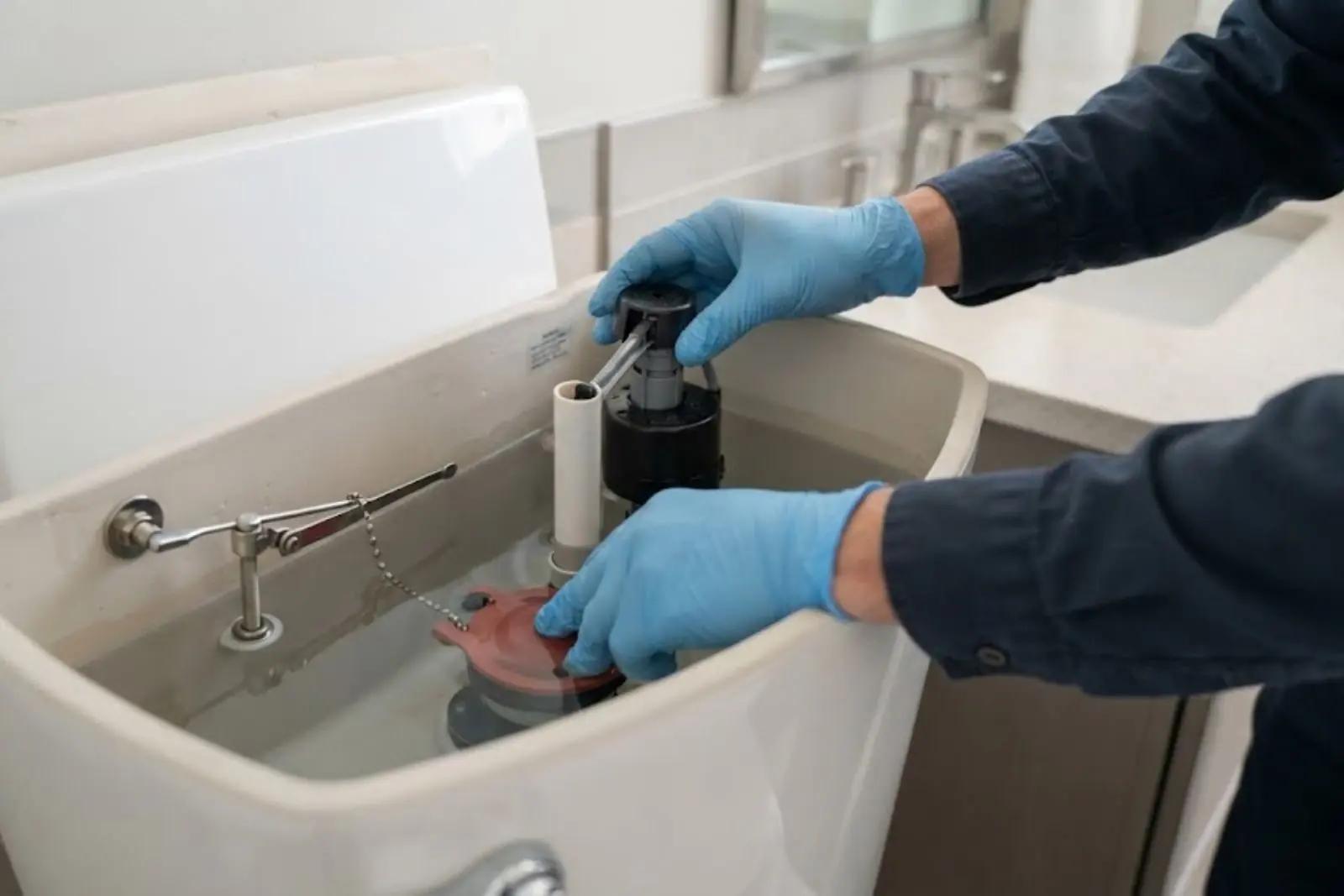
Stop the overflow before you call
Shut the supply valve
Turn the oval handle behind the toilet clockwise until it stops.
Stop the flapper
Lift the tank lid and press the rubber flapper down so the tank cannot empty into the bowl.
Do not keep flushing
More flushes pour more water into a blocked bowl.
Clear the floor
Move rugs and towels. If water has reached outlets, switch off power to that area.
Common toilet problems and what causes them
| What you notice | Usual cause | Fix |
|---|---|---|
| Bowl rises and will not drain | Blockage in the trap or the line | Auger the toilet, then check the line if it returns |
| Toilet keeps running | Worn flapper or fill valve | Replace the parts, a small repair |
| Water around the base | Failed wax ring or loose closet bolts | Reset the toilet with a new wax ring |
| Rocking or wobbling toilet | Loose bolts or a damaged flange | Tighten or repair the flange |
| Phantom flush | Slow leak past the flapper | Replace flapper and check the seat |
A toilet that clogs repeatedly may not be a toilet problem. If the tub or a floor drain also gurgles when you flush, the blockage may be in the line, and drain cleaning or sewer line cleaning is the next step.
Flange repair: the part nobody sees
The toilet flange is the ring on the floor that the toilet bolts to and that connects to the drain. If it cracks or corrodes, or sits too low after new flooring, the toilet will rock and leak at the base, and the wax seal cannot hold.
A repair ring, a stainless steel flange, or a new flange can restore the seat. If the leak has run for some time, the plumber also checks the subfloor, because water can soften plywood and mask the problem until the floor feels soft.
Leaking at the base?
Call and describe where the water appears. A wax ring or flange problem is a quick diagnosis.
Repair or replace the toilet?
Repair makes sense when
- The toilet is in good shape and only a flapper, fill valve, or wax ring has failed
- The bowl and tank are not cracked
- You like the existing toilet and its flush
Replacement makes sense when
- The porcelain is cracked
- The toilet clogs often and has an old, wasteful design
- You are remodeling or the parts are no longer available
A new toilet is a standard fixture swap. The plumber removes the old unit, checks the flange and shutoff, sets the new toilet on a fresh seal, and tests for leaks and flush performance. New installs as part of a remodel are folded into plumbing installation.
Toilets and Forest Lake's sewer rules
The City of Forest Lake asks residents not to flush wipes, feminine hygiene products, paper towels, dental floss, or cat litter. Those items cause blockages in the home's drain and in the public sewer, which is why a toilet that clogs once a month may have a habit problem, not a hardware problem.
If your toilet backs up and you live in a home on septic, the cause may be a full tank or a failing drain field. In that case a plumber checks the septic system, and the county's Public Health and Environment office regulates septic work in Washington County.
What decides the price of toilet work
A flapper and a flange are not the same job.
Insurance may cover sudden overflow damage, but gradual leaks are often excluded.
Want your real number? Call and describe the problem. You get a clear price before work starts.
Call (651) 946-0134Common Questions
Yes. The line is open 24 hours, every day. Close the supply valve and call.
Lift the tank lid, press the flapper down, and close the supply valve behind the toilet by turning it clockwise. Then call for a plumber.
It may be a weak flush, a partial blockage in the line, or too much paper and wipes. If other drains also act up, the main line may be involved.
A failed wax ring or a loose flange is the usual cause. The plumber resets the toilet and checks the floor.
Yes. Installation includes removal of the old toilet, a new seal, and testing.