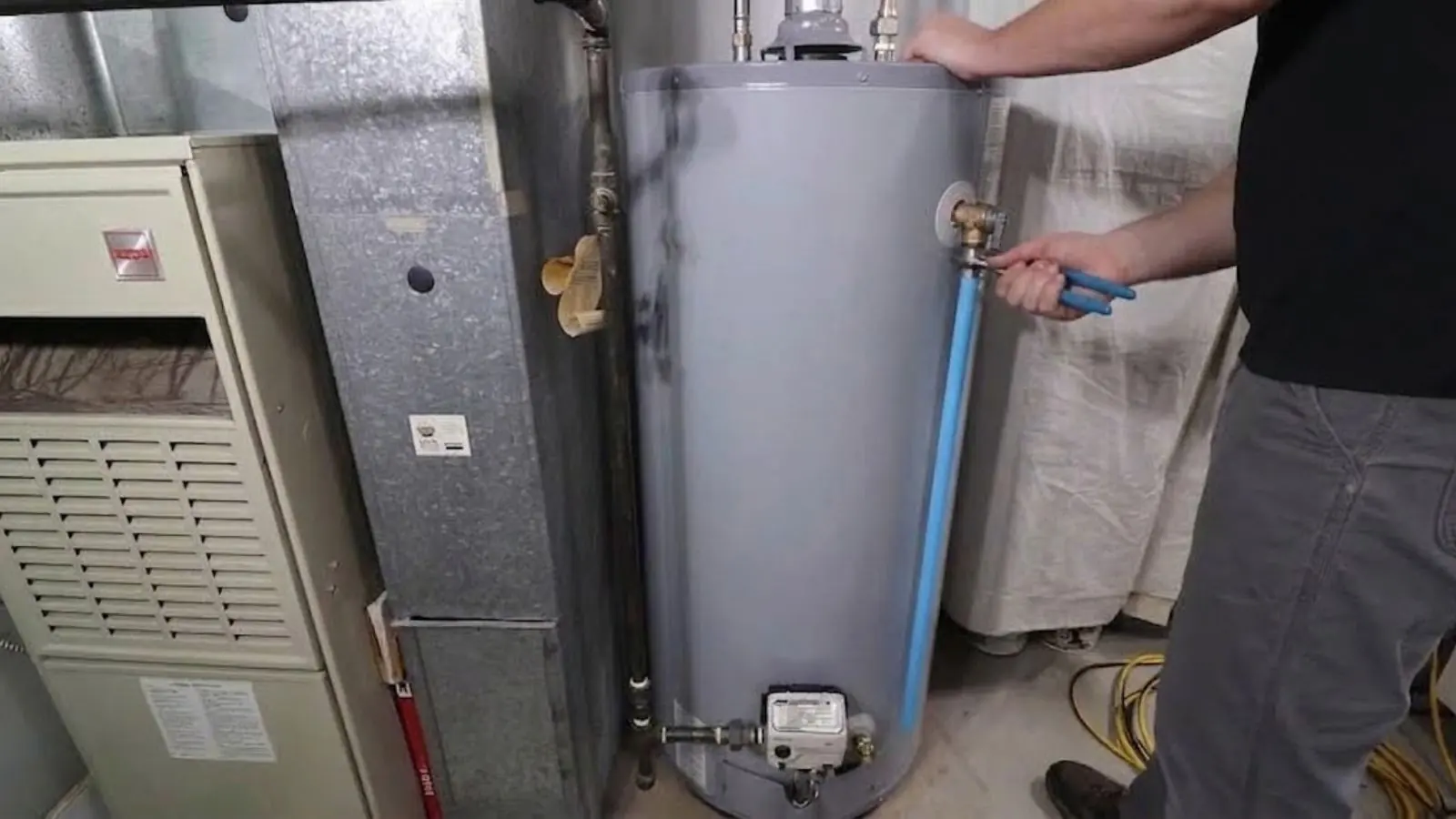
What a proper installation includes
A water heater is not just a tank on a stand. A correct install includes new supply connections, a shutoff valve, a temperature and pressure relief valve with a discharge pipe that runs to a safe spot, and a drain pan where the location calls for one.
Gas units add a gas connection with a sediment trap and a vent connection that has to draw properly. Electric units need the right breaker and wiring size. Each of those details is where do-it-yourself installs run into trouble.
| Item | Gas | Electric |
|---|---|---|
| Supply valve and flex lines | Required | Required |
| Temperature and pressure relief valve | Required, with discharge pipe | Required, with discharge pipe |
| Venting | Draft or sealed vent checked | Not needed |
| Fuel or power | Gas line and sediment trap | Dedicated breaker and wire sizing |
| Expansion tank | When the system is closed | When the system is closed |
Closed systems and expansion tanks
Many homes have a pressure reducing valve or a backflow device on the supply. That turns the plumbing into a closed system, and heated water has nowhere to expand. The pressure rises until the relief valve weeps, or until a fitting fails.
An expansion tank solves that by giving the extra volume a place to go. If a new heater is going into a closed system, the plumber checks the incoming pressure and sizes the tank to match. Skipping this is a common reason a new heater starts dripping from the relief valve.
Picking the right size and fuel
A household of two or three often does well with a 40 gallon tank. Four or more people, or a home with a large soaking tub, usually calls for 50 gallons or more. Peak demand matters more than the headcount, so tell the plumber when everyone showers.
Fuel follows what the house already has. Natural gas homes tend to stay with gas for lower running costs, and homes without gas look at electric or a hybrid heat pump unit. If a switch is on the table, it affects venting, wiring, and the gas line, so raise it early.
Want help choosing?
Call and give the plumber your household size, fuel, and where the heater sits.
Tank, tankless, or hybrid: a decision framework
A tank is a good fit when
- The existing gas line and venting can be reused
- You want the lowest upfront cost
- Space is not a problem
Tankless or hybrid is worth a look when
- You want to free up floor space
- Hot water demand is high and constant
- You are ready to pay more upfront for lower running costs
A switch to on-demand hot water has its own requirements, which are laid out on the tankless water heater page. If your current unit has just failed and you need hot water today, emergency water heater replacement is the faster route.
Local notes for Forest Lake installs
City water in Forest Lake is softened at the plants and averages 5.5 to 6.5 grains per gallon, so a new tank here does not need a water softener to survive. Homes on private wells should test the water first, because hardness or iron can change which unit and which anode rod make sense.
Permit and inspection requirements for new water heaters depend on state code and local rules. Ask the Forest Lake building department what applies to your address. A plumber handling the install knows which steps to expect.
What decides the price of an installation
Two homes with the same tank can have very different totals.
Insurance does not cover a planned upgrade. Some utilities or manufacturers offer rebates on efficient models, so ask the utility serving your address.
Want your real number? Call and describe the problem. You get a clear price before work starts.
Call (651) 946-0134Homeowners in newer subdivisions such as Headwaters can read what is and is not documented about homes there.
Checking a plumber's license
According to the Minnesota Department of Labor and Industry, plumbing contractors must hold a state license, with a responsible master plumber and a surety bond. The license lookup at dli.mn.gov lets you confirm any plumber before you hire.
Common Questions
A like-for-like tank install is usually a half day. Changes in fuel, venting, or location take longer.
If your home has a pressure reducing valve, a backflow preventer, or a check valve on the supply, the system is probably closed and an expansion tank is advised.
Often yes, but the new spot needs venting, drainage, and supply access. The plumber checks the layout and explains what the move adds.
It depends on the location. A heater in a finished space or above living areas usually should have one with a drain line.
On city water, the city already softens to an average of 5.5 to 6.5 grains per gallon, so a softener is not required for the heater. On a private well, test the water first.