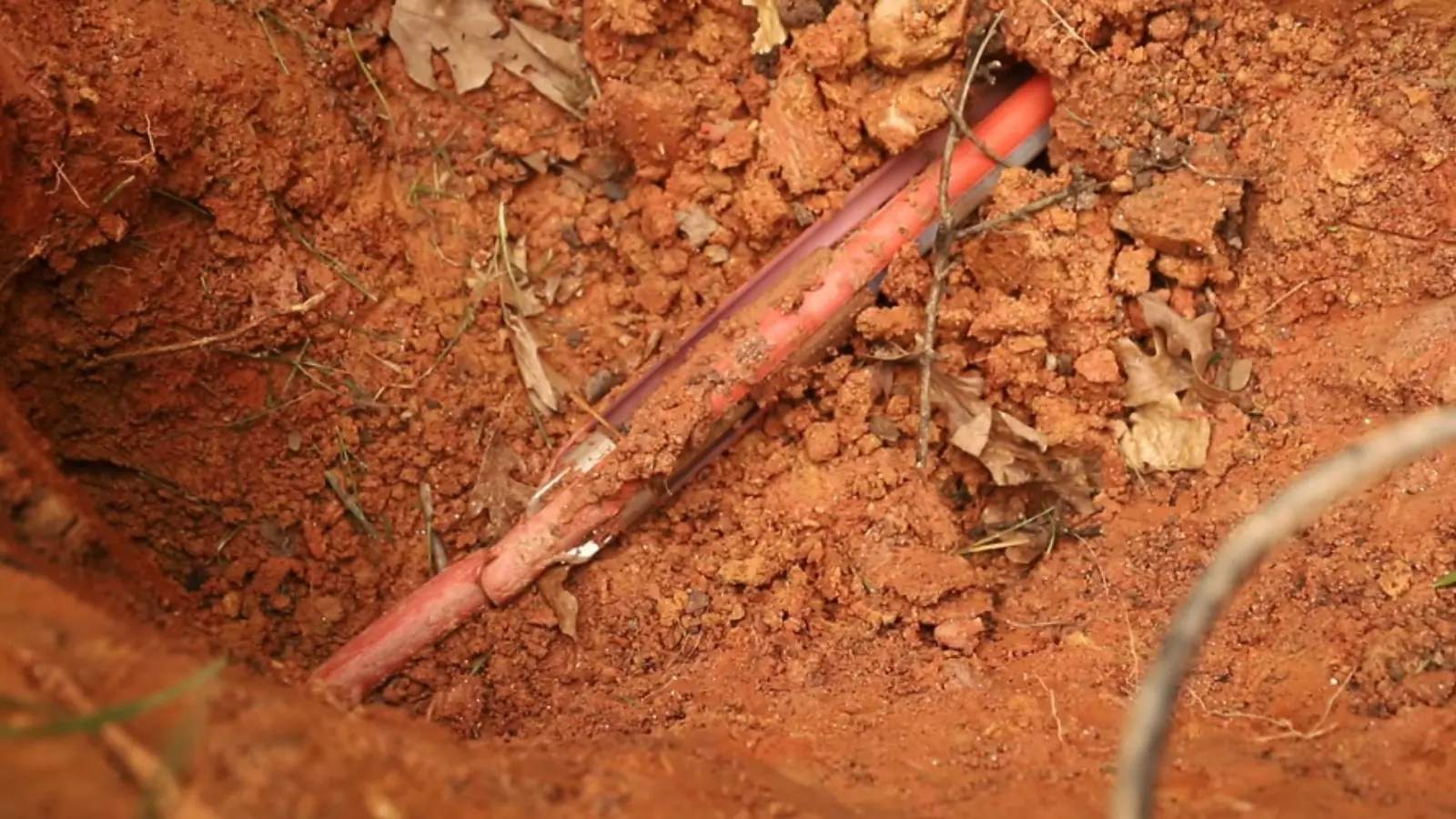
Signs of a service line problem
Wet or soft spots in the yard
Water pooling between the street and the house with no rain is a leaking service line until proven otherwise.
A high water bill
The City of Forest Lake reads meters quarterly, so a slow underground leak can run for weeks before the bill shows it.
Low pressure at every fixture
A partly failed line or a corroded pipe can strangle flow.
Water meter that never stops
If it moves with every fixture off, water is escaping somewhere past the meter.
Who is responsible for which part?
The City of Forest Lake's Water Department says the city maintains the water main and the line up to the curb stop, and that the line beyond it is the customer's. To tell which side a leak is on, the city shuts off the curb stop. If water keeps flowing, the leak is on the city side. If it stops, the leak is on the customer side.
Only city employees may operate the curb stop. That is worth knowing before you call, because the first diagnostic step on a suspected service line leak often involves the city, and a plumber can help you coordinate.
| Option | When it fits | What to expect |
|---|---|---|
| Spot repair | A short leak or a damaged fitting | A small excavation and a new section |
| Trenchless replacement | A long run in a finished yard | Pits at each end, less lawn damage |
| Open trench replacement | Shallow, simple runs | A trench along the line |
| Interior reroute | A line that cannot be reached outside | New pipe run through the house |
Suspect a service line leak?
Call and tell the plumber what you see in the yard or on the meter.
Lead and galvanized service lines in Forest Lake
The city publishes a lead service line inventory on its Water Department page. The 2023 inventory lists 408 lead services and 46 galvanized services requiring replacement, with 3,895 non-lead lines, and the city points residents to the University of Minnesota Lead Inventory Tracking Tool to look up an address.
If your service line is lead or galvanized, a leak is a good moment to plan the full replacement, because opening the ground twice costs more. Ask the plumber what material your line is, and ask the city about its replacement plans for the public side.
How a service line is found and fixed
Locate the line
The plumber uses the meter, a locator, and the house entry point to trace the path.
Pinpoint the leak
Acoustic or pressure methods narrow the leak to a short stretch. See leak detection for how that works.
Excavate or pull a new line
A small pit for a spot repair, or two pits for trenchless replacement.
Test and restore
The line is pressure tested, the water turned back on, and the area backfilled.
Winter adds a problem. A line that is not buried deep enough or is exposed near the foundation can freeze. If the water stops at every tap on a very cold night, ask about a frozen service line, and for a pipe split inside the house see burst pipe repair.
What decides the price of service line work
A short repair and a full replacement are very different jobs.
Homeowners insurance usually does not cover a worn service line, though some policies offer an optional endorsement. Ask your insurer.
Want your real number? Call and describe the problem. You get a clear price before work starts.
Call (651) 946-0134Who operates the street valve
According to the City of Forest Lake Water Department, the curb stop at the street is operated by city staff only. Do not count on it to stop water in an emergency, and close the main valve inside your home instead.
Common Questions
Yes. The line is open 24 hours, every day. Shut off the main valve inside the house and call.
The City of Forest Lake says only city employees may operate the curb stop. Use the main valve inside the house.
The city publishes a lead service line inventory and points to the University of Minnesota Lead Inventory Tracking Tool. A plumber can also identify the material where the line enters the house.
The city maintains the main and the line up to the curb stop. The part beyond it is the customer's responsibility.
A spot repair can take a few hours. A full replacement usually takes a day or more depending on length, ground, and method.